
How to Photograph Sharks in Costa Rica: Camera Settings, Tips & Best Dive Sites
There are few underwater experiences that compare to seeing your first shark under water. Whether it's a graceful bull shark cruising past at Bat Islands, a nurse shark shark resting beneath a rocky ledge, or a white tip sleeping quietly on the seabed, every encounter offers a unique photographic opportunity.
It also presents a challenge.
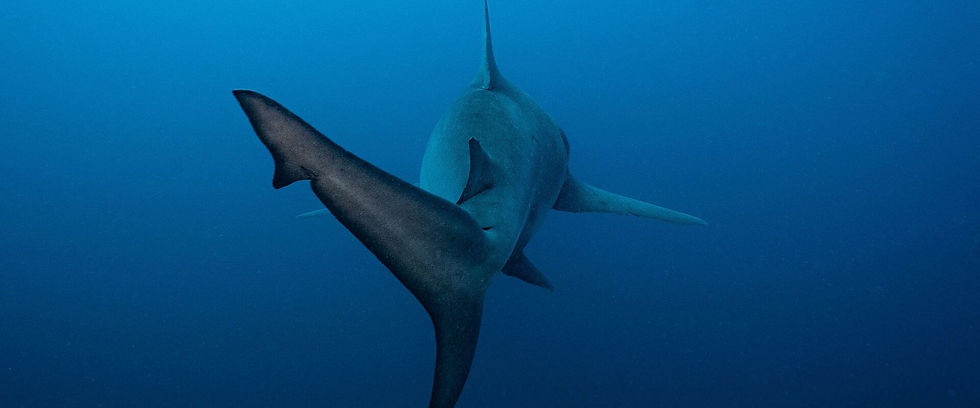
Unlike many tropical destinations with crystal-clear water and predictable conditions, Costa Rica's Pacific coast is dynamic. Visibility can change during a single dive, thermoclines can reduce clarity in an instant, and plankton-rich water often gives photographs a green colour cast.
Add strong currents and fast-moving marine life, and it's easy to see why photographing sharks here requires more than simply copying someone else's camera settings.

The good news? Once you learn to photograph sharks in Costa Rica, you'll develop skills that translate to almost any diving destination in the world.
In this guide, we'll share practical techniques, recommended camera settings, and local knowledge to help you capture stronger shark images while respecting both the animals and their environment.
Why Costa Rica Is One of the Best Places to Photograph Sharks
Costa Rica is famous for its biodiversity, and that extends beneath the surface. While many divers dream of pristine blue water, experienced underwater photographers know that the nutrient-rich Pacific is exactly what attracts the marine life they're hoping to photograph.

Depending on the season and dive site, you may encounter:
Bull sharks cruising through the blue at Bat Islands.
Whitetip reef sharks resting beneath rocky ledges during the day.
Nurse sharks lying motionless on sandy bottoms or under reef overhangs.
These species all behave differently, which means your photography approach should change as well.
One of the biggest mistakes photographers make is using the same technique for every shark encounter. A resting nurse shark allows you to slow down and think about composition, while a passing bull shark may give you only a few seconds to adjust your settings and capture the moment.

Learning to recognise these situations and adapting quickly, is one of the most valuable underwater photography skills you can develop.
Forget Perfect Settings—Start With Good Ones
One of the most common questions we hear is:
"What are the best camera settings for photographing sharks?"
The honest answer is that there aren't any.
There are good starting points, but the best settings depend on the available light, visibility, your distance from the shark, the current, and how quickly the animal is moving.
For most wide-angle shark photography in Costa Rica, we recommend starting with:
Starting Settings
Aperture: f/11
Shutter Speed: 1/250 sec
ISO: Auto ISO (maximum around ISO 640–800)
Focus Mode: Continuous AF (AF-C)
Drive Mode: Continuous Low
White Balance: Auto
File Format: RAW
Use strobes with care. Depending on you systemstart with -3 or of you use TTL set to full mode.
Think of these settings as your starting point and not your final destination.
As the conditions change, your camera settings should change too.
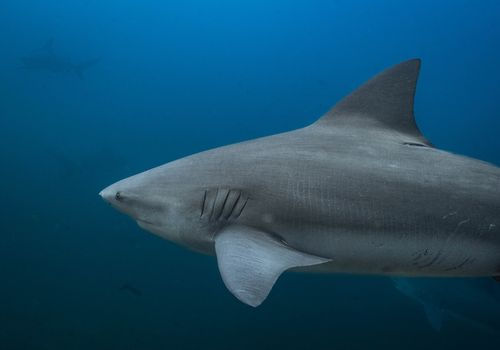
If visibility decreases, you may need to move closer and adjust your strobe positioning.
If clouds cover the sun, Auto ISO can help maintain a consistent exposure.
If a shark suddenly appears from the blue, Continuous AF and burst shooting increase your chances of capturing the perfect moment.
The best underwater photographers aren't the ones who memorise settings. They're the ones who understand when to change them.
📷 Pro Tip
Before the sharks arrive, take a few test shots of the reef and blue water.
Check your histogram.
Adjust your exposure.
When the action starts, you'll already know your camera is close to the right settings, allowing you to focus on timing and composition instead of scrolling through menus.
Get Close
Every meter of water between your camera and the shark reduces sharpness, contrast, and colour.
One of the most effective ways to improve your shark photography has nothing to do with your camera.
Simply get closer to the subject or let the shark come closer.

Of course, this should always happen naturally and respectfully. Never chase or corner a shark. Instead, position yourself carefully, remain calm, and allow the shark to swim through your frame.
Not only will your photographs look cleaner and sharper, but the shark's behaviour will also appear much more natural.
Think About the Background
A beautiful shark can still produce an average photograph if the background is distracting.
Whenever possible, try to:
Photograph slightly upward to create a clean blue-water background.
Leave space in front of the shark to suggest movement.
Avoid cutting off the tail or fins.
Keep other divers from distracting the composition unless they add a sense of scale.
Sometimes including a diver in the frame transforms an ordinary shark photograph into a powerful storytelling image. Rather than simply documenting a shark, you're showing the experience of diving with one.

Shark conservation in Costa Rica with CREMA. Tissue samples of our resident sharks tells us a lot about the health of the local shark population.
Do you want to know more about under water photography in Costa Rica ? Contact us directly at info@richcoastdiving.com


.png)
Comments