
25 Questions Future Dive Instructors Ask
Updated: Sep 17
Becoming an SSI Open Water Instructor is one of the most exciting steps in a diver's journey. It's also a big decision, and naturally, you'll have plenty of questions before committing to an Instructor Training Course (ITC).
To help you make an informed decision, we've answered the questions we're asked most often by future instructor candidates at Rich Coast Diving in Costa Rica.
Whether you're planning to teach full-time, travel the world, or simply explore a new career, these answers will help you understand what to expect.

1. What is an SSI Instructor Training Course (ITC)?
The ITC is the professional training program that prepares qualified divemasters to become SSI Open Water Instructors. During the course, you'll develop your teaching skills, improve your diving knowledge, learn SSI standards, and prepare for the Instructor Evaluation (IE).

2. How long does the Instructor Training Course take?
Most SSI Instructor Training Courses take approximately 10 to 12 days, followed by the Instructor Evaluation. Here at Rich Coast Diving the total program is 14 days and includes accommodation.

3. How many dives do I need?
You'll need to meet the SSI prerequisites of 100 dives before certification. If you're not quite there yet, many Career Centers can help you gain the required experience before starting your ITC.
4. Can I become an instructor if I'm certified with PADI?
Absolutely. SSI welcomes divers from other recognized agencies. If you are a PADI, Naui, CMAS or any other divemaster you can join our ITC.
READ more about the benefits of SSI vs PADI for dive instructors.

5. Am I too old to become a dive instructor?
Not at all. Every year people in their 30s, 40s, 50s, and even older successfully become instructors. Passion, professionalism, and communication skills are far more important than age.
6. Do I need perfect diving skills before starting?
Yes, during you divemaster training you are perfecting your diving skills so you can learn how to teach them to other during the ITC.
That said, many candidates might start the ITC several month or years after becoming a dive instructor. Therefor we offer a refresh workshop before the ITC to improve your skills and prepare you to teach confidently.

7. Is becoming a dive instructor difficult?
The course is challenging because you're learning to teach others rather than simply dive yourself. With proper preparation, practice, and coaching, most motivated candidates successfully complete the program. We are proud to say that we have a 100% passing rate on the IE.

8. How much does an Instructor Course cost?
Costs vary considerably depending on the destination and what's included. Always compare accommodation, learning materials, examination fees, instructor materials, and additional charges, not just the advertised course price.
Here at Rich Coast Diving we offer one price that includes everything and no hidden costs. Plain and simple. Contact us directly for Price and Availability.

9. What's included in most ITCs?
Typically:
Instructor training
Digital learning materials
Classroom sessions
Pool sessions
Open water presentations
At Rich Coast Diving we also include: the Instructor Evaluation (IE), 14 days of accommodation, workshops, specialty instructor certifications, and career support, FREE head shots for your CV and more.
10. What equipment do I need?
Professional divers are expected to own their personal diving equipment, including BC, regulator, dive computer, exposure suit, compass, DSMB, and safety equipment.

11. Can I make a career from diving ?
Yes. Thousands of instructors work around the world in dive centers, resorts, liveaboards, conservation organizations, and marine tourism.
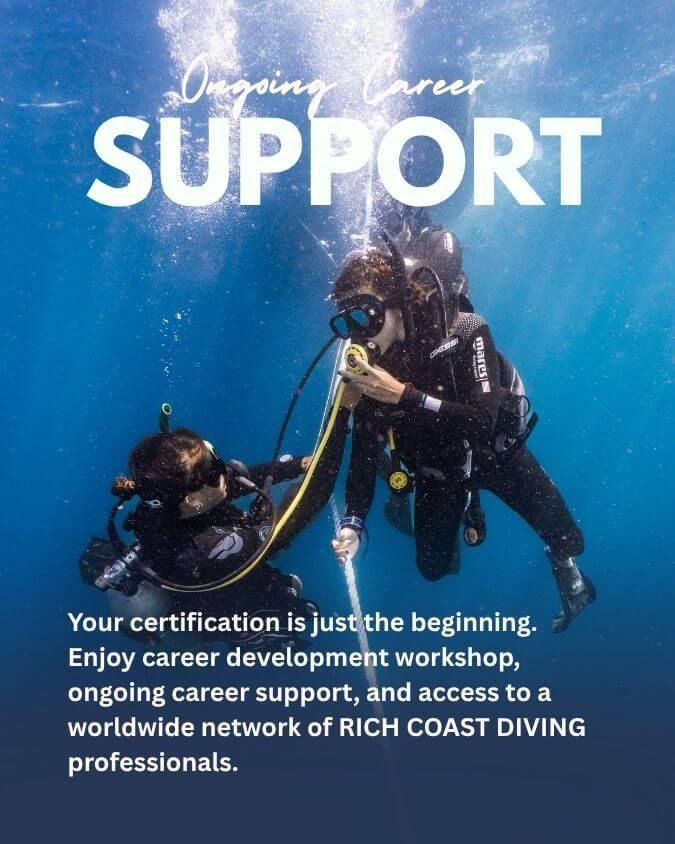
We are proud to say that all our instructor candidates found employment after completing the ITC. Here at Rich Coast Diving we have a vast international network of dive professionals all around the world.
Besides our job placement and career workshop helps you to get started in the diving industry.

12. How much do dive instructors earn?
Like in any industry, salaries vary widely depending on location, experience, employer, and whether accommodation, meals, or commissions are included.
Many instructors value the lifestyle, travel opportunities, and flexible career as much as the income. Generally there is a base salary and then you earn commission on courses and guided dives. On top of that you share tips with the rest of the crew.
Since our dive instructors teach many courses they do not pay any membership fees to SSI. Another great reason to choose for SSI !

If you can reduce your travel expenses and accommodation expenses by for example working longer in one place. And not job hop every 6 months, you save a lot of money.
Often it is not about how much you earn but about how smart you plan your expenses. If you plan your career then the diving industry offers a fantastic liife style that you can afford on instructor salary.
13. Is it easy to find a job?
The dive industry regularly recruits qualified instructors, especially those with strong teaching skills, multiple specialties, and a professional attitude.
During our Career workshop you learn how to successfully get your first job as a dive instructor and plan your career in diving.
Have a look at the SSI job board for current jobs.

14. Should I choose SSI or PADI?
Both are internationally recognized organizations. The best choice often depends on where you want to work and the quality of the training center rather than the logo on your certification card.
That said, SSI offers incredible benefits to dive professionals and as a career center (30 years PADI and now SSI) that crossed over to SSI we can honestly say SSI offers the best benefits and job opportunities for our professional candidates.

15. Why do some Instructor Courses cost much more?
Often because they include:
Accommodation
Learning materials
Workshops
Instructor specialties
Career coaching
Smaller groups
More personalized training
Always compare value, not just price. Make sure there are no hidden costs before you book.
16. Is Costa Rica a good place to become an instructor?
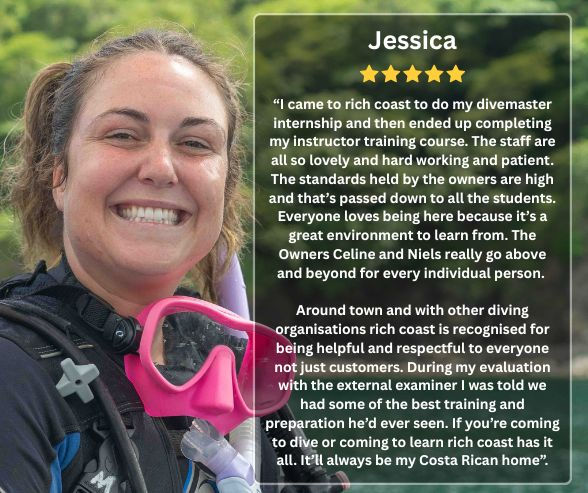
Costa Rica offers year-round diving, dynamic Pacific conditions, incredible marine life, and an outdoor lifestyle that appeals to many future dive professionals.
With 2 inhouse instructor Trainers and a Career Center with over 33 years of experience with training dive professionals we can honestly say that Rich Coast Diving in Costa Rica is a great choice to become a dive instructor.

17. Why do so many people choose Thailand?
Thailand is famous for affordable prices, warm water, excellent visibility, and its vibrant backpacker community. If you want to avoid the crowds and look for high quality training and personal attention, then Costa Rica is a better option.
18. Which country is better?
There's no universal answer. Thailand is ideal for candidates seeking affordability and easy diving conditions, while Costa Rica appeals to divers looking for more varied conditions, smaller groups, and a career-focused experience.
19. Will I be nervous teaching my first students?
Almost everyone is. A good ITC gradually builds your confidence through repeated practice, feedback, and real teaching experience. Many of our candidates stay with us after they complete the ITC to assist or teach their first courses.
20. What happens after I pass?
After successfully completing the Instructor Evaluation, you'll become an SSI Open Water Instructor and can begin applying for teaching positions around the world.
Read our blog about: How to Successfully Apply for a Divemaster or Scuba Instructor Job: Complete Guide

21. Can I teach specialty courses immediately?
You'll be able to teach certain specialties immediately, while others require additional Instructor Specialty Seminars. All of our ITC include the following specialties:
Nitrox Enriched Air
Computer Diving
Perfect Buoyancy
Equipment Specialist
Marine Ecology
SSI Explorers
For additional instructor specialty courses you follow the Specialty seminar with our Instructor Trainer. The more specialties you can teach the more valuable you are in the diving industry.
Read more about Instructor Specialty Courses in our blog.

22. How can I improve my chances of finding work?
Learn another language.
Develop customer service skills.
Gain other valuable skills like equipment maintenance technician, compressor tecnician, underwater photographer, outboard engine maintenance, fiber glass and hull repair,
Continue expanding your instructor specialty ratings.
Gain more teaching exprience on the full range of SSI courses
READ our blog: Job application guide
23. Is becoming a dive instructor worth it?
If you enjoy diving, meeting people, traveling, and teaching others, many instructors consider it one of the most rewarding careers they could have chosen.

24. How do I choose the right Instructor Training Course?
Look beyond the price. Choose a SSI Career Center (the highest rating in the diving industry)
and Compare Instructor Trainers, class sizes, career support, what's included, graduate reviews, and opportunities to gain real teaching experience.
👉 We explain this in detail in our guide: How to Choose the Right SSI Instructor Training Course
The first step is simply reaching out. Tell us about your current certification level, diving experience, and career goals. We'll explain your options, answer your questions, and help you decide whether an Instructor Training Course is the right next step for you.
Final Thoughts
Every dive professional starts with questions. The important thing is finding reliable answers before making one of the biggest decisions in your diving career.
Whether you're comparing destinations, training organizations, or Instructor Training Courses, take your time, ask questions, and choose a program that prepares you not just to pass the Instructor Evaluation, but to become a confident, knowledgeable, and inspiring dive professional.
Ready to become an SSI Open Water Instructor?
Our upcoming Instructor Training Courses in Playas del Coco, Costa Rica, combine personalized coaching, small class sizes, accommodation included, and ongoing career support to help you build a successful career in diving.
Contact Rich Coast Diving today to request the complete ITC information pack and start planning your next adventure.
For more information and questions contact us directly at info@richcoastdiving.com



.png)
Comments