
What to Expect During the SSI Instructor Evaluation (IE): A Complete Guide for Future Dive Instructors
Becoming a dive instructor is a journey. Some go zero to hero, but most candidates spend a few years building their diving experience, complete their Divemaster training, and finally arrive at the Instructor Training Course (ITC) with one goal in mind: becoming a professional dive educator.
The ITC is an intense and rewarding experience where you learn how to teach, how to use the SSI Education System, how to organize training sessions, and how to create safe and enjoyable learning experiences for your future students. But after the ITC comes the final step:
The Instructor Evaluation (IE).
The IE is the moment where an independent SSI evaluator assesses whether you are ready to become an SSI Open Water Instructor.

Many candidates feel nervous before their IE. This is completely normal. After all, this is the final assessment after months or even years of preparation.
However, understanding what happens during the IE can remove much of the uncertainty. The IE is not designed to surprise candidates or create unnecessary stress. It is designed to confirm that you have developed the knowledge, teaching ability, and professionalism required to represent SSI as an instructor.
In this guide, we explain what to expect during the SSI Instructor Evaluation and how you can prepare with confidence.

ITC vs IE: What Is The Difference?
One of the most common questions future instructors ask is:
"What is the difference between the ITC and the IE?"
The answer is simple:
The ITC is where you learn and practice. The IE is where you demonstrate that you are ready.
During your Instructor Training Course, your Instructor Trainer works with you every day. They guide you, provide feedback, correct mistakes, and help you develop as an instructor.
The Instructor Evaluation is different. The evaluator is not your trainer. Their role is to objectively assess whether you can safely and effectively teach SSI programs without assistance. The evaluator is chosen by SSI.
A good comparison is learning to drive:
Your ITC is driving school. You practice with an instructor who helps you improve.
Your IE is your driving test. You demonstrate that you can drive safely on your own.
The goal is not perfection. The goal is showing that you can provide safe, professional, and enjoyable training experiences for your students.

What Happens During The SSI Instructor Evaluation?
The exact schedule depends on the number of candidates and the logistics of the evaluation, but most IEs include the following sections:
Introduction and orientation
Open Water Instructor final exam
SSI Education System evaluation
Academic teaching presentation
Confined water teaching presentation
Skill demonstration
Rescue skills demonstration
Open water teaching presentation
Final performance review
Each part evaluates a different aspect of being an instructor.
A good instructor needs more than diving skills. They need knowledge, communication skills, problem-solving ability, professionalism, and the ability to make students feel safe and confident.

The Beginning Of The IE: Introduction And Orientation
The IE usually begins with introductions between the evaluator and the candidates. This first session is important because it sets the tone for the entire evaluation. While the IE is a serious professional assessment, it is also designed to be a positive learning experience.
Candidates introduce themselves and share information about their diving background, professional experience, and motivation for becoming an instructor.
You may be asked about:
Your diving experience
Your professional background
Why you want to become an SSI Professional
Why you want to become an instructor
Your favorite dive experiences
The evaluator will also explain:
The schedule
Expectations
Evaluation criteria
Passing requirements
A clear understanding of the process helps candidates focus on what matters: demonstrating their abilities.

The SSI Open Water Instructor Final Exam
Knowledge is the foundation of good teaching. Before you can teach others, you must have a strong understanding of diving theory, standards, and SSI programs.
The Open Water Instructor Final Exam consists of: 50 questions
The exam covers important areas including:
SSI General Training Standards
Open Water Diver program
Enriched Air Nitrox
Diver Stress and Rescue
Dive Guide
Perfect Buoyancy
The minimum passing score is: 90%
Candidates are allowed to use approved resources such as SSI Training Standards, Enriched Air Nitrox tables, and a calculator for calculations.
SSI Education System Evaluation
SSI is more than a certification agency. It is a complete education system designed around creating confident and comfortable divers.
During this evaluation, candidates must demonstrate their understanding of how SSI works and how they will use the system as instructors.
Topics may include:
Student progression
Training records
Digital learning materials
Certification procedures
Continuing education opportunities
Supporting students after certification

The evaluator is looking for more than memorized answers. A strong instructor candidate can explain concepts in their own words and connect them to real diving situations.
For example, an instructor should not only know that students can continue their education after Open Water Diver certification. They should understand how to guide students toward specialties, experience-building opportunities, and becoming lifelong divers.

Academic Teaching Presentation
One of the most important parts of the IE is the academic teaching presentation. Candidates receive a topic from one of the SSI programs, such as:
Open Water Diver
Enriched Air Nitrox
Diver Stress and Rescue
Dive Guide
The presentation usually lasts between 10 and 15 minutes. The evaluator is not looking for a university lecture. They want to see whether you can communicate clearly and create an effective learning experience using the SSI Total Teaching system.

Confined Water Teaching Evaluation
Teaching skills in confined water is where many candidates discover the difference between knowing a skill and teaching a skill. During this evaluation, candidates teach a skill from the Open Water Diver or Diver Stress and Rescue program.
The evaluator watches how you:
Brief the students
Demonstrate the skill
Position yourself
Observe students
Identify problems
Provide corrections
During your ITC you will be evaluated by your Instructor Trainer using the same criteria your Evaluator will be using during the IE. If you did well during your ITC, there is no reason for you not to pass the IE. You got this !

Rescue Skills Demonstration
Safety is the responsibility of every dive instructor. During the rescue evaluation, candidates demonstrate the rescue of an unconscious diver.
This evaluation focuses on the complete rescue sequence, including:
Approaching and controlling the diver
Bringing the diver safely to the surface
Maintaining the airway
Transporting the diver
Removing the diver from the water
This is a pass/fail evaluation because rescue skills require a high level of competence and confidence.
The evaluator is looking for calm, controlled, and effective actions.

Open Water Teaching Evaluation
The final teaching evaluation takes place in an actual open water environment. Candidates teach two assigned skills from the Open Water Diver program as if they were conducting a real student training session.
The evaluator looks at:
Safety awareness
Organization
Student control
Communication
Adaptation to student problems
Teaching technique
The best candidates stop thinking about the IE and start teaching. They focus on creating a safe and positive learning experience.

How To Prepare For Your SSI IE
The best preparation starts before the evaluation. During the Instructor Training Course (ITC), your instructor trainers make sure you are confidend to pass the IE based on everything you have learned and practiced dring the ITC. If the instructor trainer feels you are not ready to go the IE. They will discuss this with you and recommend further training and join the next upcoming IE. This might be dissappointing at firt but it will help you having a better chance and be more confident at the IE and aso not waste your money on another IE.
What Happens If You Do Not Pass The IE?
Not passing one part of an IE does not mean the end of your instructor journey. The evaluator will provide feedback and explain what areas need improvement. Some candidates need more practice with presentations. Others need to improve skill demonstrations or knowledge areas.
The purpose of the IE is not simply to decide who passes or fails. It is to ensure that every SSI Instructor entering the industry has the ability to teach safely and professionally.
Many excellent instructors have faced challenges during their professional development. What matters is learning from the experience and continuing to improve.

Final Thoughts: The IE Is The Beginning, Not The End
Passing the Instructor Evaluation is an important milestone, but it is not the final destination.
Becoming an instructor means accepting the responsibility of guiding others into the underwater world.
Your students will remember much more than the certification card they receive.
They will remember whether they felt safe, supported, and inspired. The ITC prepares you for the IE. The IE confirms that you are ready to start your career as an SSI Professional.

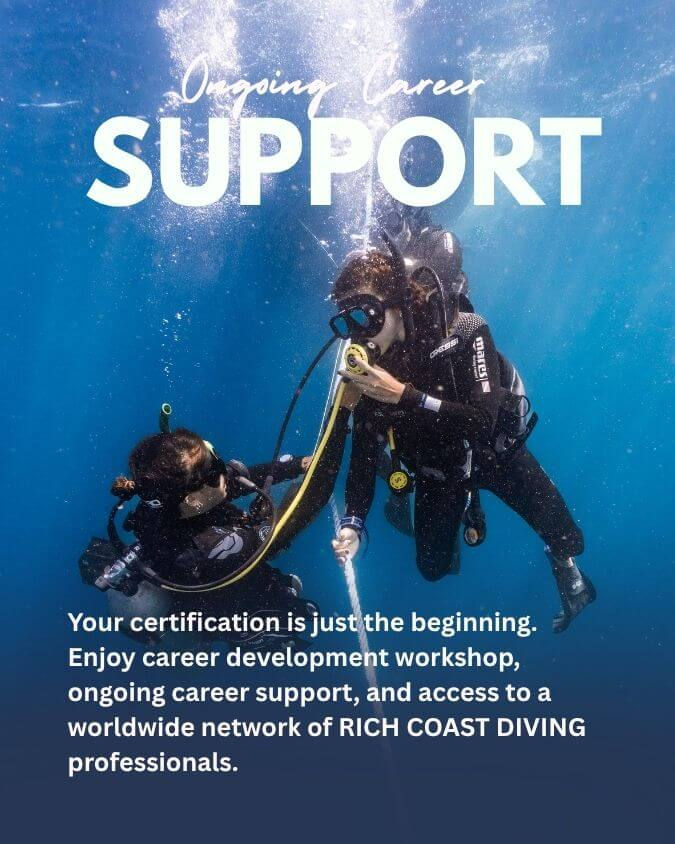
At Rich Coast Diving in Costa Rica, our goal is not only to help candidates pass their Instructor Evaluation. We focus on developing confident, professional instructors who are ready to teach, lead, and inspire divers around the world.
Ready to start your journey toward becoming an SSI Instructor ?
Learn more about our SSI Instructor Training Course in Costa Rica and take the next step toward your professional diving career.

For more information contact us directly at info@richcoastdiving.com or visit our Instructor Page.


Comments